Canless Ultra-Thin Wafer LEDs vs Traditional Can Housings: Heat & Safety
Choosing between canless ultra-thin wafer LEDs vs traditional can housings often comes down to how much clearance you have in your ceiling and your specific safety concerns regarding heat buildup. While traditional housings are built for bulky incandescent or halogen bulbs that generate significant thermal energy, modern wafer lights utilize slim LED technology that runs much cooler.
Homeowners frequently worry about fire risks and insulation contact when upgrading their lighting systems. This article explores the technical differences between these two options to help you decide which is safer and more efficient for your next home renovation or lighting retrofit project.
The Verdict on Safety and Heat Dissipation
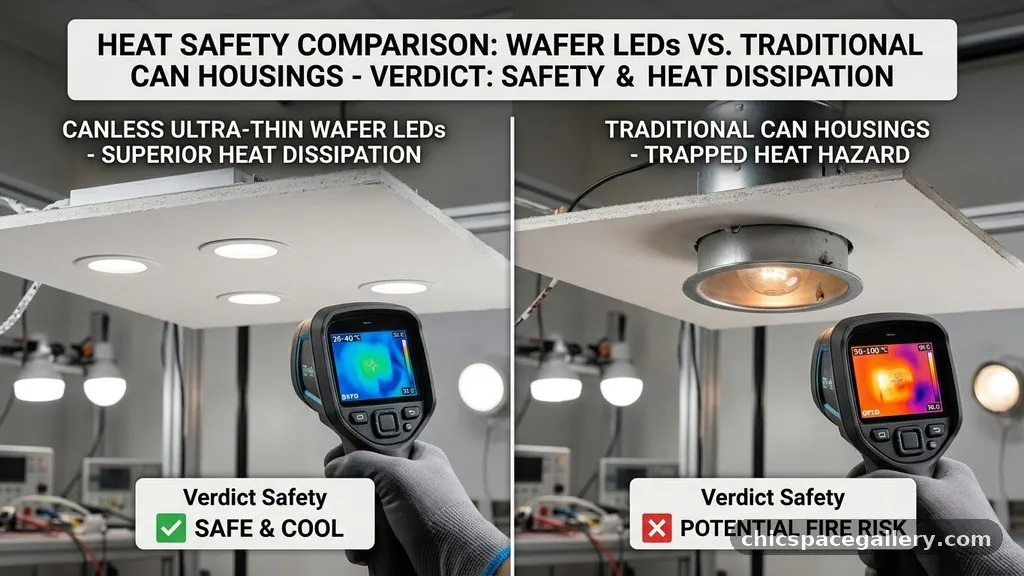
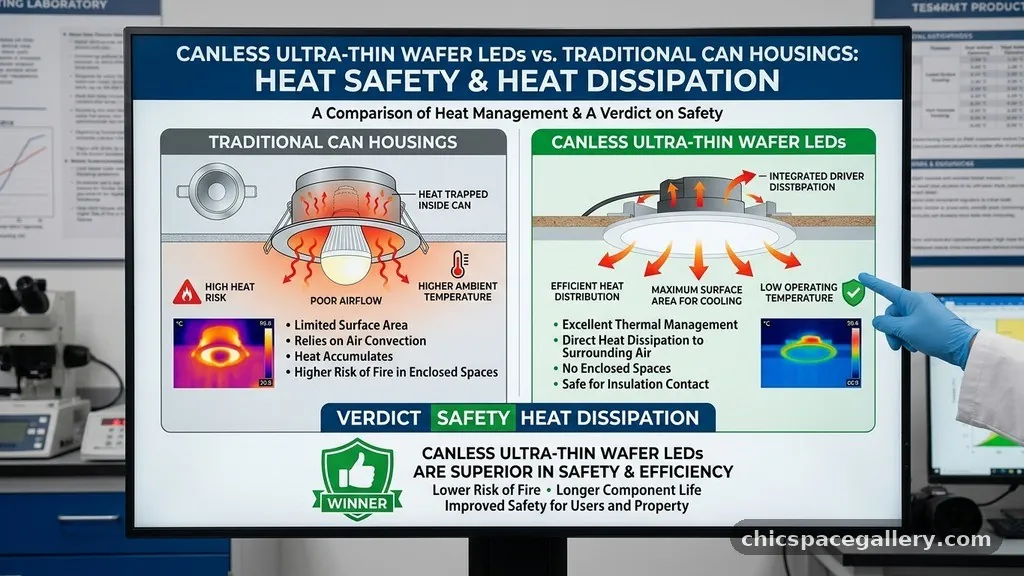
When comparing canless ultra-thin wafer LEDs vs traditional can housings, the primary safety advantage lies in the operating temperature of the light source. Traditional incandescent-style recessed cans were designed to house bulbs that could reach temperatures exceeding 200 degrees Fahrenheit.
This intense heat necessitated large, ventilated metal housings to prevent the surrounding ceiling joists and insulation from overheating. Because of this, traditional cans often require strict clearance distances to avoid fire hazards.
Wafer LEDs, by contrast, operate at significantly lower temperatures because they are solid-state devices. These fixtures rarely exceed 100 degrees Fahrenheit during normal operation.
This reduction in thermal output means they are much less likely to cause damage to nearby drywall or attic insulation. If you are concerned about heat buildup in tight ceiling cavities, the move toward canless lighting is a clear technological upgrade.
Understanding Thermal Management in Recessed Lighting
Traditional recessed lighting housings act as large heat sinks designed to dissipate the energy generated by hot bulbs. If you install a high-wattage bulb in a housing that isn’t rated for it, the heat trapped in the can can trigger a thermal protector switch.
This switch will cut power to the light, causing it to blink or shut off entirely until it cools down. It is a safety feature, but it is also a sign that the fixture is struggling with the environment.
Wafer lights shift this thermal management approach by integrating the LED driver directly into the unit or keeping it in a separate, small junction box. The heat generated by the LED chip is dispersed through the aluminum frame of the wafer itself.
Because the fixture is so thin, it has a high surface-area-to-volume ratio. This allows heat to dissipate into the room air rather than being trapped inside the ceiling joist space.
Fire Safety and Insulation Contact
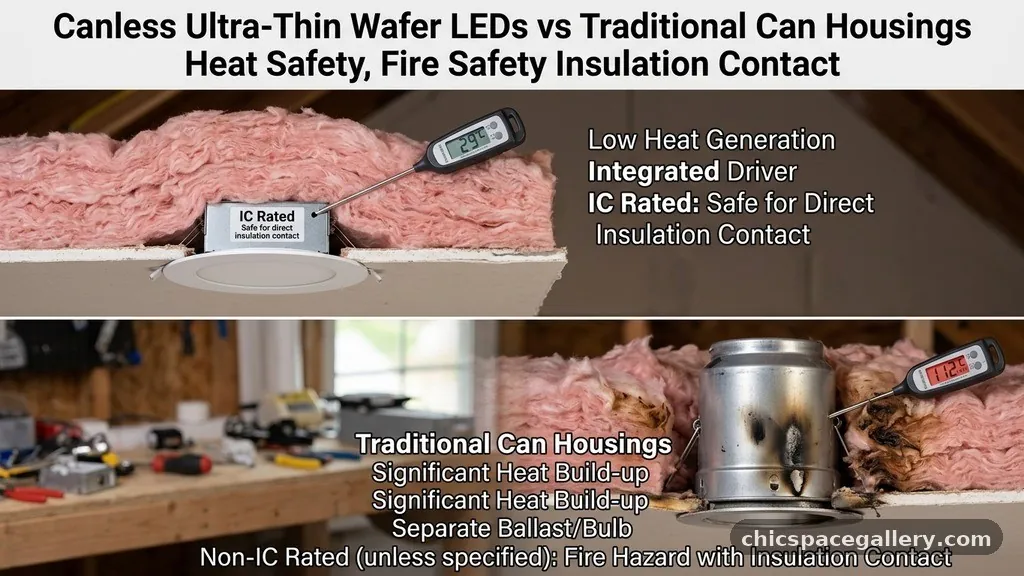
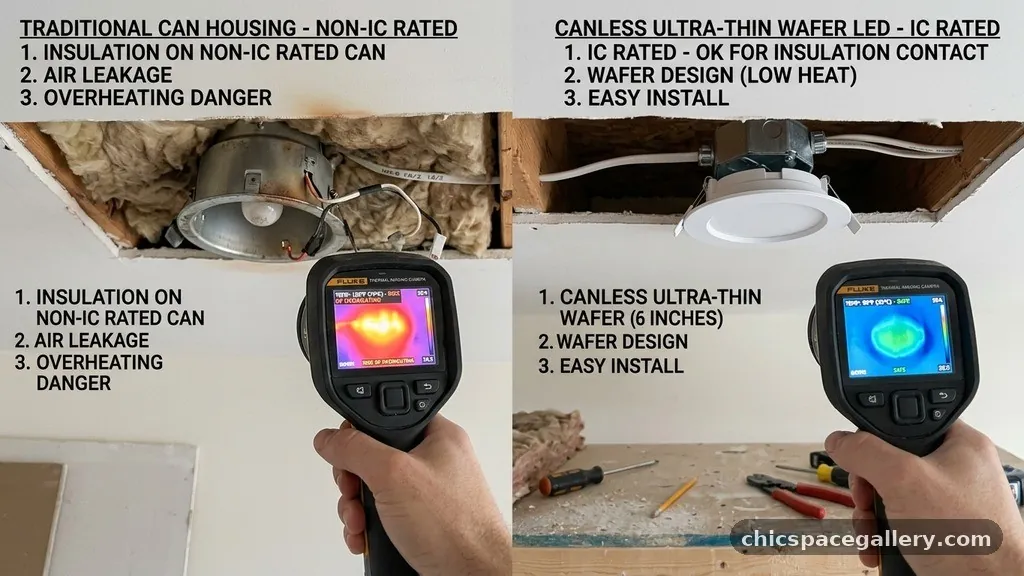
One of the biggest concerns for contractors and homeowners is whether a light fixture can safely touch insulation. Traditional “IC-rated” (Insulation Contact) housings are specifically designed to be buried in blown-in attic insulation without causing a fire.
Non-IC-rated housings, however, require a “spacer” or a metal box to keep insulation away from the hot can. Failure to provide this clearance is a common cause of building code violations and potential fire risks.
Canless ultra-thin wafer LEDs are almost universally IC-rated by design. Because they produce so little heat, they are inherently safer for use in ceilings where attic insulation is present.
You do not need to install complex baffles or build wooden boxes around them. This significantly reduces the risk of human error during the installation process, as there is no “wrong” way to place insulation around these thin, cool-running units.
Installation Complexity and Labor
The installation process for traditional cans is labor-intensive compared to the plug-and-play nature of wafer lights. A traditional housing requires you to secure a large metal canister to the joists, run wiring to the junction box on that canister, and then install the trim and bulb. This process is time-consuming and often requires significant drywall repair if you are retrofitting into an existing ceiling.
Wafer lights simplify this process by eliminating the housing entirely. You simply cut a hole in the drywall, connect the remote junction box to your electrical supply, and snap the wafer light into the hole using spring-loaded clips.
This makes them an ideal solution for retrofitting because you can install them anywhere there is space, regardless of whether a joist is directly in the way. The following table provides a quick comparison of the logistical differences.
| Feature | Traditional Can Housing | Canless Wafer LED |
|---|---|---|
| Space Requirement | High (requires deep joist cavity) | Minimal (fits in tight spaces) |
| Thermal Output | High (requires ventilation) | Low (cool to the touch) |
| Installation Time | Long (requires framing/joist access) | Short (drywall-mount clips) |
| Insulation Safety | Requires specific IC rating | Generally IC-rated standard |
Energy Efficiency and Operational Costs
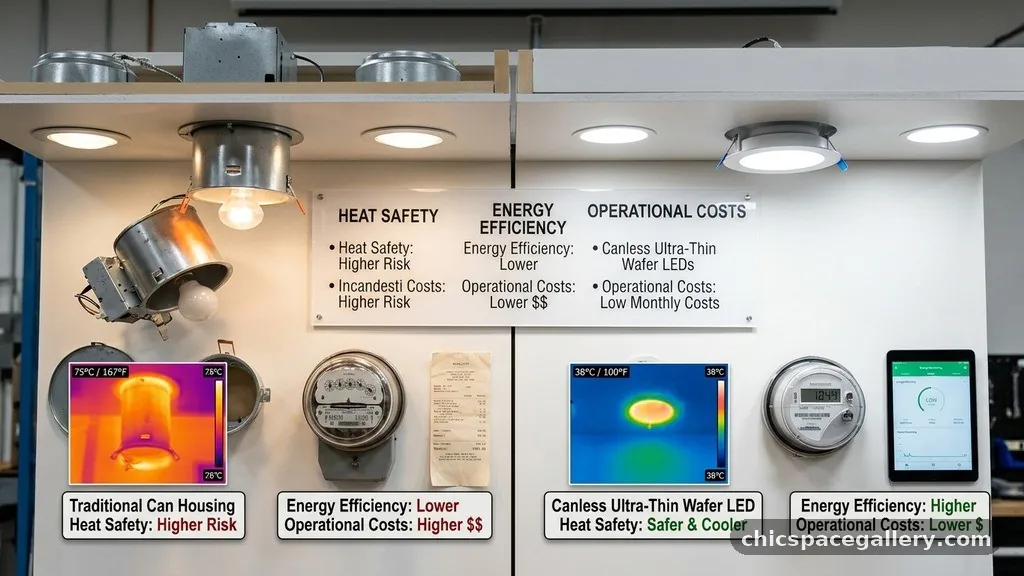
Beyond safety and heat, energy efficiency is a major driver in the shift toward wafer lights. Traditional cans often use replaceable bulbs, which can be upgraded to LEDs, but the housing itself remains a source of air leakage. A large, open can housing allows conditioned air from your home to escape into the attic, which increases your heating and cooling bills.
Wafer lights create a much tighter seal against the ceiling drywall. Because they are thin and have an integrated gasket, they effectively block air exchange between the living space and the attic.
This contributes to better home performance and lower energy usage per year. When you calculate the total cost of ownership, the energy savings from a sealed, LED-based system are substantial over the life of the fixture.
Building Codes and Electrical Standards
Electrical codes are constantly evolving to reflect the safety profiles of modern lighting. Most modern building inspectors prefer or require IC-rated fixtures in residential ceilings, especially where insulation is present. When you choose canless ultra-thin wafer LEDs vs traditional can housings, you are opting for technology that aligns with modern safety standards.
It is important to note that you should always look for the UL or ETL certification mark on any lighting product. These third-party testing organizations verify that the fixture meets specific heat and safety standards.
Even with wafer lights, buying unbranded or low-quality imports can result in poor heat dissipation or flickering drivers. Stick to reputable brands that provide clear documentation on their safety ratings.
Retrofitting vs New Construction
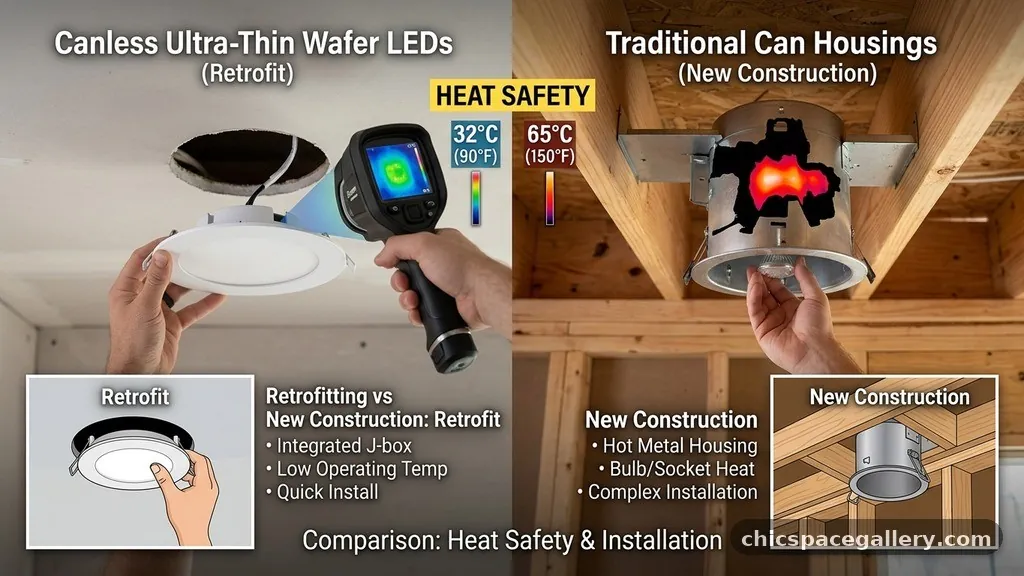
When you are planning a new construction project, you have the flexibility to choose either system. However, in a retrofit scenario, the choice is usually dictated by the existing structure. If you have a finished ceiling with limited access to the joist bays, traditional cans are often impossible to install without removing large sections of drywall.
Wafer lights were essentially invented to solve the problem of “the joist in the way.” Because they do not rely on a bulky housing, you can place them exactly where you need them for optimal light distribution. This flexibility means you can achieve better lighting design without compromising the structural integrity of your ceiling or creating a massive renovation project.
Comparing Light Quality and Dimming
A common misconception is that wafer lights produce inferior light compared to traditional bulbs. Modern LED technology has advanced to the point where wafer lights can offer high Color Rendering Index (CRI) values, often above 90. This means colors appear vibrant and natural, which is crucial for kitchen and living room lighting.
Dimming is another area where modern wafer lights have caught up to traditional fixtures. Most quality LED wafers are compatible with standard triac dimmers, allowing you to create the perfect ambiance.
Always check the manufacturer’s compatibility list to ensure your specific dimmer switch won’t cause the lights to buzz or flicker. For more detailed technical guidance on home lighting safety, consult the National Electrical Code (NEC) standards.
Common Mistakes to Avoid
Even with the ease of installing wafer lights, there are pitfalls to avoid. One common mistake is ignoring the size of the junction box when you are working in a tight ceiling.
While the light itself is thin, the junction box needs to be accessible for future maintenance. Never bury the junction box behind insulation or drywall in a way that makes it impossible to reach.
Another error is failing to account for the thickness of the drywall. Most wafer light clips are designed for standard half-inch or five-eighths-inch drywall.
If you are installing them in a double-layered ceiling or a different material, the clips may not hold securely. Always measure your ceiling thickness and check the product specifications before you start cutting holes.
Addressing Frequently Asked Questions
Are wafer lights as durable as traditional housings?
Generally, yes. While the driver is a small electronic component that can eventually fail, the LED chips themselves have an extremely long lifespan, often rated for 50,000 hours of use. Traditional housings last a long time, but the socket inside often corrodes or fails, and replacing the whole can is a significant chore.
Do I need an electrician to install wafer lights?
While the installation is straightforward, it still involves working with 120-volt wiring. If you are not comfortable working with electrical circuits, it is best to hire a licensed electrician. They can ensure that all connections are made in approved boxes and that the circuit is properly grounded.
Can I install wafer lights in a shower or damp location?
Many wafer lights are “wet-rated” or “damp-rated,” making them perfectly safe for bathrooms and showers. Always check the packaging for the specific rating. Using a non-rated light in a wet location is a major safety hazard and will likely lead to early failure of the fixture.
What is the biggest downside to canless wafer lights?
The main trade-off is that they are integrated units. If the LED board fails, you typically have to replace the entire light fixture rather than just swapping out a bulb. However, given their long life and low cost, most homeowners find this acceptable compared to the hassle of traditional can maintenance.
Are wafer lights compatible with smart home systems?
Many manufacturers now produce “smart” wafer lights that can be controlled via Wi-Fi or Bluetooth. You can also use smart dimmers to control standard LED wafers. This provides excellent flexibility without needing to replace the fixtures themselves if you decide to upgrade your home automation later.
Key Considerations for Your Next Project
The decision between canless ultra-thin wafer LEDs vs traditional can housings is largely a choice between older, bulky technology and modern, streamlined efficiency. Wafer lights provide a safer, more versatile, and energy-efficient solution for almost any residential application.
They eliminate the thermal risks associated with traditional bulbs and simplify the installation process significantly. By choosing high-quality, certified fixtures, you can ensure that your home remains safe, well-lit, and compliant with modern electrical standards.
As you plan your renovation, consider the layout of your joists and the specific lighting needs of each room. If you are still unsure about which system suits your home, start with a small test installation in a single room.
You will likely find that the ease of use and the clean, modern aesthetic of wafer lights make them the preferred choice for your future upgrades. Engaging with a professional for your initial installation can provide peace of mind and ensure every connection is secure for years to come.