
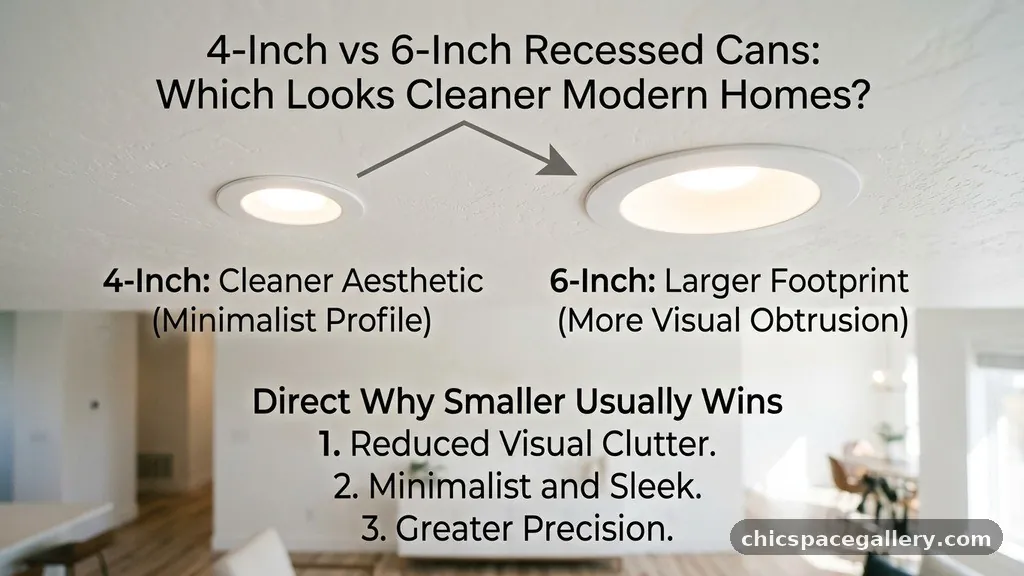
4-Inch vs 6-Inch Recessed Cans: Which Looks Cleaner in Modern Homes?
Choosing between 4-inch vs 6-inch recessed cans often feels like a minor detail, but it significantly dictates the overall aesthetic and illumination quality of your living space. Modern interior design trends heavily favor smaller, less intrusive fixtures that blend into the ceiling plane rather than commanding attention. While 6-inch fixtures were the industry standard for decades, contemporary home design has largely pivoted toward the more discreet profile of 4-inch options.
Understanding how these two sizes impact your room’s atmosphere is essential for achieving a clean, professional look. This article helps you determine which size fits your specific needs by examining design trends, light distribution, and the practical realities of home installation.
The Direct Answer: Why Smaller Usually Wins
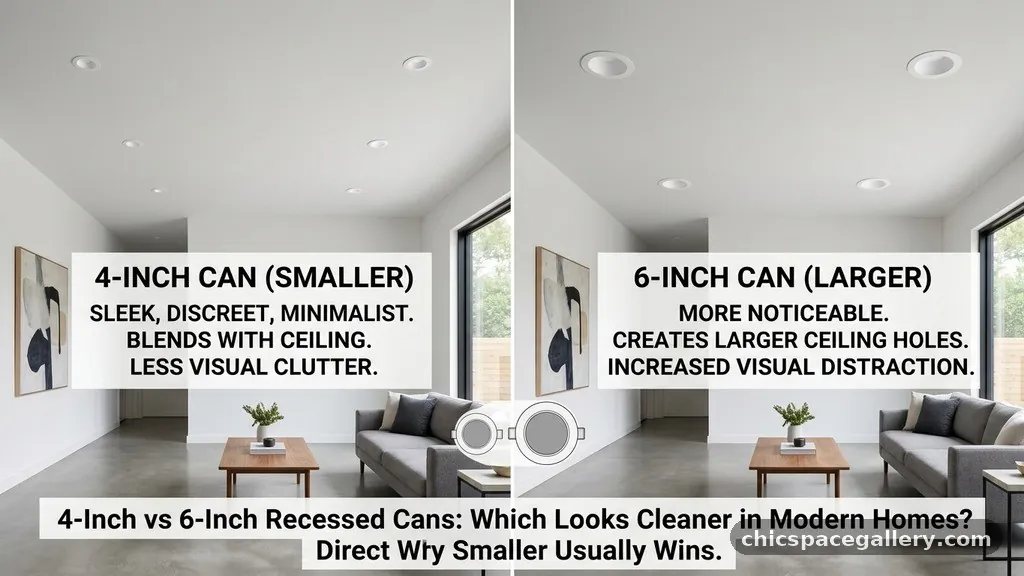
When you compare 4-inch vs 6-inch recessed cans, the 4-inch option is almost universally considered the cleaner, more modern choice. Larger 6-inch fixtures occupy more visual real estate on your ceiling, which can make a room feel cluttered if you have many of them installed. In contrast, 4-inch cans provide a minimalist look that draws the eye to the architecture or decor of the room rather than the light source itself.
If you want your home to feel current and high-end, the 4-inch fixture is the clear winner for most residential applications. You will find that even with a smaller footprint, modern LED technology ensures that you lose very little in terms of total light output.
The Evolution of Recessed Lighting Standards
Recessed lighting, often referred to as “can” lighting, has undergone a massive transformation in the last twenty years. Builders traditionally installed 6-inch cans because they were compatible with standard incandescent bulbs, which were large and generated significant heat. These larger housings provided the necessary ventilation to keep those older bulbs from overheating and failing prematurely.
As lighting technology evolved, the industry shifted toward LED modules, which are significantly smaller and cooler. This shift allowed designers to shrink the aperture of the light fixture without sacrificing the amount of illumination provided to the room. The 6-inch can is now often viewed as a legacy product, while the 4-inch fixture represents the contemporary standard for new construction and major renovations.
Visual Impact and Ceiling Clutter
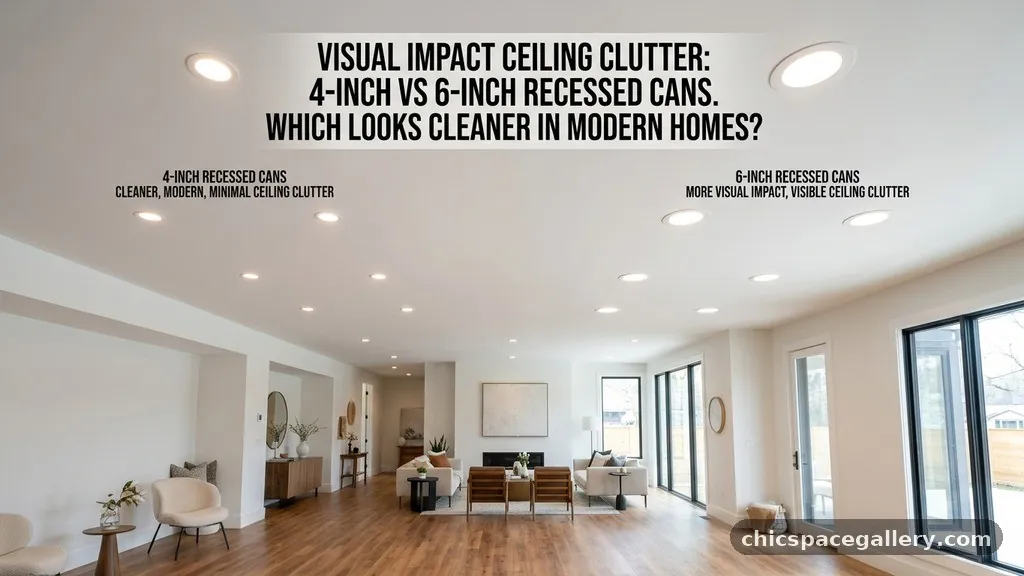
The primary reason homeowners opt for smaller fixtures is to minimize “ceiling clutter.” When you install a grid of 6-inch lights, the ceiling can quickly look like a piece of Swiss cheese, especially in smaller rooms or hallways. Reducing the diameter of the fixture by two inches might seem trivial, but it makes a massive difference in how the eye perceives the ceiling surface.
A 4-inch light creates a subtle point of light that feels intentional and architectural rather than functional and utilitarian. In minimalist or modern homes, the goal is to hide the source of the light while highlighting the room’s features. Smaller fixtures excel at this by remaining unobtrusive and allowing the light to wash over surfaces without the distraction of a wide metal rim.
Light Distribution and Beam Spread
One common misconception is that a smaller fixture produces a narrower beam or less total light. In reality, the beam spread is determined more by the optics and the lens of the LED module than by the diameter of the canister itself. Many 4-inch fixtures now feature wide-angle lenses that provide excellent coverage across a room, matching the performance of their larger counterparts.
If you are lighting a large living room, you might need a slightly higher density of 4-inch lights to achieve the same coverage as fewer 6-inch lights, but this is usually a benefit. More lights placed strategically allow for better control and less shadowing in corners. You can learn more about proper illumination techniques through the Illuminating Engineering Society guidelines for residential lighting design.
Installation and Retrofitting Realities
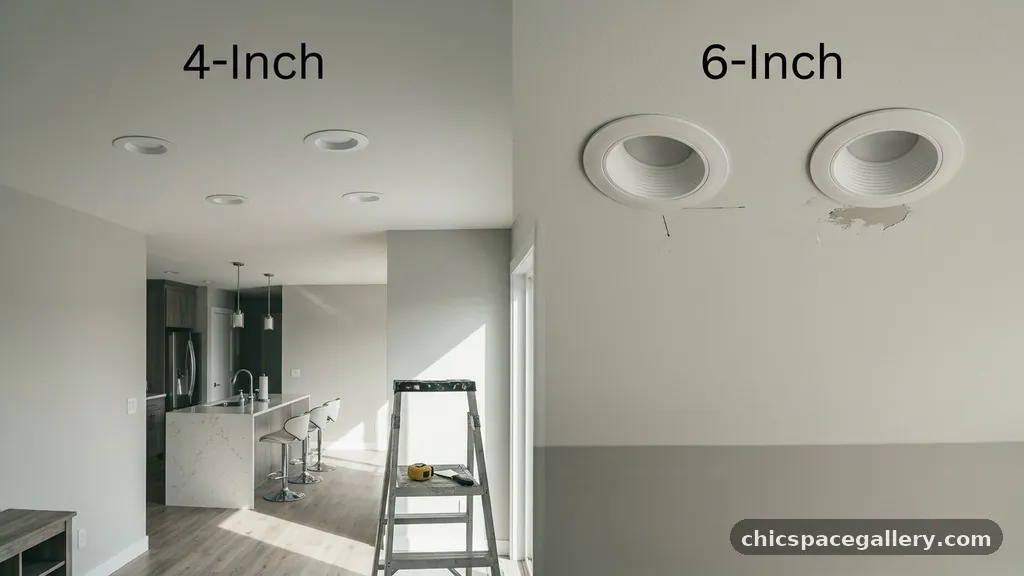
The practical aspect of choosing between these sizes often comes down to what is already in your ceiling. If you are retrofitting an existing home that already has 6-inch holes, switching to 4-inch fixtures is a labor-intensive process. You would need to patch the drywall, prime, and repaint the entire ceiling to accommodate the smaller size.
However, if you are working with new construction or a complete ceiling renovation, the installation process is identical for both types. Both sizes typically use the same wiring standards and mounting hardware, meaning there is no cost penalty for choosing the smaller option. Always confirm that your chosen LED modules are compatible with the housing you select, as some modern trims are designed specifically for one size or the other.
Comparing the Two Sizes
It is helpful to look at the functional differences side-by-side to understand how they perform in various scenarios. While both can be dimmed and offer various color temperatures, their physical presence changes the room’s character.
| Feature | 4-Inch Recessed Can | 6-Inch Recessed Can |
|---|---|---|
| Visual Footprint | Minimal and discreet | Large and prominent |
| Modern Appeal | High; standard for new builds | Low; often considered dated |
| Installation Effort | Standard for new ceilings | Standard for new ceilings |
| Light Coverage | Focused and precise | Broad and general |
| Best Room Use | Living rooms, kitchens, offices | Basements, garages, large halls |
Performance in Specific Room Types
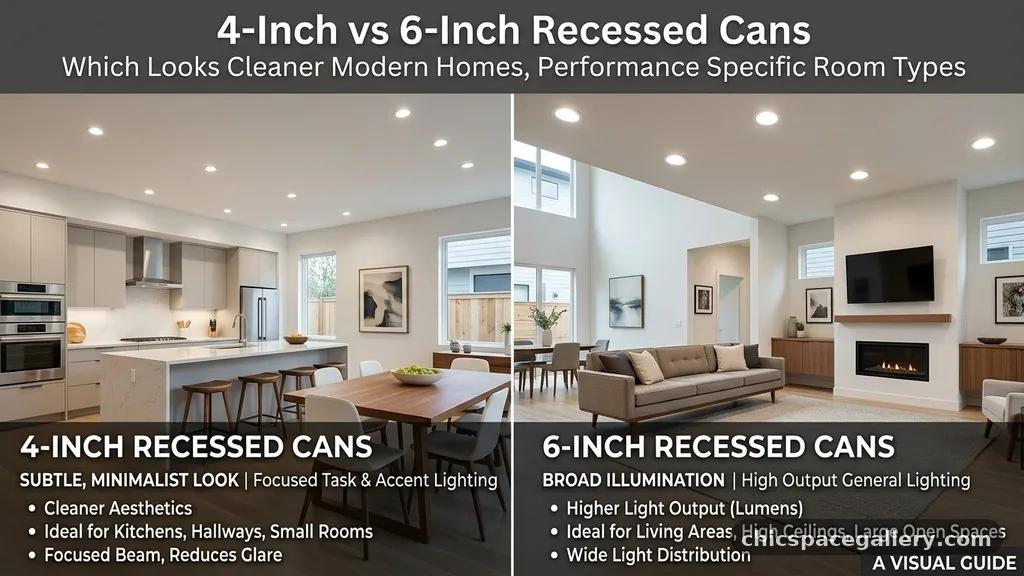
Different rooms have unique lighting requirements that influence your decision. In kitchens, where task lighting is paramount, 4-inch lights are excellent for placing directly over countertops. Because they are smaller, you can cluster them more effectively to eliminate shadows created by your body while you work.
In living rooms, 4-inch lights allow for a more balanced look, especially when you use them to highlight artwork or architectural details. Conversely, 6-inch lights are sometimes preferred in garages or large, unfinished basements where you need maximum light output per fixture to cover a vast area quickly. However, even in these utility spaces, the 4-inch look is gaining popularity as homeowners prioritize a cohesive aesthetic throughout the entire house.
Addressing the “Dated” Aesthetic
The perception that 6-inch lights are “dated” stems from their association with the 1990s and early 2000s residential boom. During that period, builders used large cans because they were the cheapest and most readily available option for standardized lighting. Because these fixtures were everywhere, they became synonymous with a mass-produced, builder-grade look.
Switching to 4-inch fixtures is one of the easiest ways to signal that a home has been updated or custom-designed. By choosing the smaller size, you avoid the aesthetic baggage associated with older construction styles. This small change makes a room feel more expensive and thoughtfully designed, even if the rest of the furniture remains the same.
Strategic Placement for Better Results
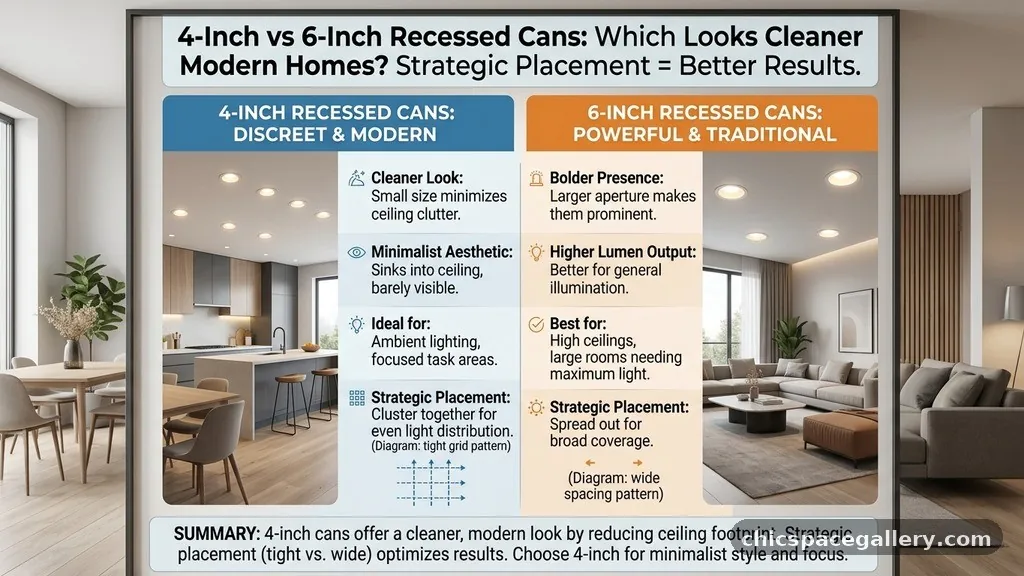
Regardless of the size you choose, the placement of your lights is just as important as the size of the cans. A common mistake is to align lights in a straight, rigid grid that ignores the room’s layout. Instead, try to place your lights in zones that correspond to the function of the furniture below.
For example, place lights to wash a wall containing a fireplace or a bookshelf, rather than just filling the center of the room. This technique, known as wall washing, makes a space feel larger and more inviting.
When using 4-inch cans, you have more flexibility to create these zones without the ceiling feeling overloaded with hardware. Experimenting with spacing and grouping can transform a standard room into a professional-looking space.
Common Questions About Recessed Lighting
Should I mix 4-inch and 6-inch lights in the same room?
Mixing sizes in a single room is generally discouraged because it creates visual inconsistency. Your eyes will naturally be drawn to the difference in size, which makes the ceiling look disorganized. It is best to stick to one size per room or at least per floor to maintain a clean, professional aesthetic.
Is a 6-inch light ever the better choice?
A 6-inch light can be the better choice if you are replacing existing fixtures and want to avoid the cost of drywall repair. It is also suitable for very large, high-ceilinged spaces like barns or industrial-style lofts where a larger light source is needed to provide enough “punch.” In these rare cases, the scale of the room justifies the size of the fixture.
Do 4-inch lights provide enough light for a kitchen?
Yes, 4-inch lights are more than capable of lighting a kitchen when placed correctly. Because they are smaller, you can install more of them to create a uniform wash of light across your workspace. Using LED modules with high lumen output ensures that you have plenty of brightness for food preparation and cleaning.
Are there energy differences between these sizes?
Energy consumption is determined by the LED bulb or module, not the housing size. A 10-watt LED bulb will consume the same amount of electricity whether it is in a 4-inch or a 6-inch housing. The efficiency of the light depends on the quality of the LED trim you choose, not the diameter of the can.
Can I install 4-inch lights in an insulated ceiling?
You can, but you must ensure the housing is rated as IC (Insulation Contact) rated. This is a critical safety feature that allows the fixture to come into direct contact with insulation without creating a fire hazard. Always check the packaging for the IC rating before purchasing any recessed housing for a ceiling with attic space above it.
Making Your Final Decision
Choosing between 4-inch vs 6-inch recessed cans ultimately comes down to your priorities regarding aesthetics and renovation budget. If you are building new or doing a major remodel, the 4-inch fixture is almost always the superior choice for a modern, clean look. It offers a sophisticated, minimalist profile that elevates the interior design without compromising on light quality or output.
While 6-inch cans have their place in utility spaces or retrofitting projects, they rarely serve the design goals of a contemporary home. By focusing on smaller, more intentional lighting, you ensure that your home feels current and well-lit.
Take the time to map out your lighting plan before you cut any holes, as the right placement will make the size choice even more effective. If you are ready to start your project, prioritize these smaller fixtures to achieve a polished, professional finish that will stand the test of time.